
Lake County criminal defense lawyers: Driver’s License Suspensions and Reinstatement
Losing your driver’s license is more than an inconvenience; it’s a profound disruption to your life. We rely on our ability to drive for everything: getting to work, taking children to school, attending medical appointments, and buying groceries. When that privilege is suddenly revoked, the consequences can be immediate and catastrophic. You might be facing this situation due to a recent arrest or an accumulation of old issues. Understanding why your license was suspended and what steps you can take to get it back is the first move toward regaining control. This is a complex process, often involving both the court system and the state’s licensing bureau, and it’s a challenge best navigated with a professional. If you find yourself needing a criminal lawyer Lake County, know that this is a common and solvable legal problem.
The Shock of a Suspended License: What It Means for You
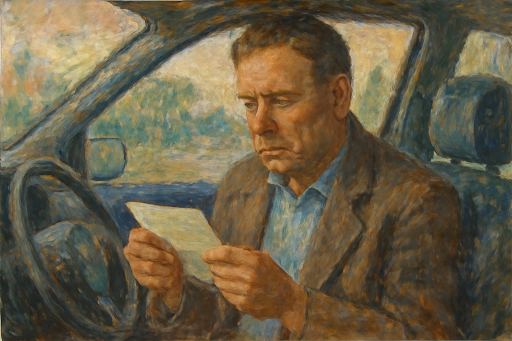
The moment you are informed that your license is suspended, your world shrinks. The most immediate concern for many is employment. How will you get to your job? If your job requires you to drive, a suspension can be grounds for immediate termination.
Beyond work, the daily logistics of life become a significant burden. Routine tasks are suddenly complex challenges. This isolation and loss of independence can lead to immense stress, financial strain, and a feeling of being trapped. It’s a serious penalty that goes far beyond a simple fine, impacting your freedom of movement and your ability to provide for yourself and your family.
Why Was My License Suspended? Common Reasons and Triggers
A driver’s license suspension doesn’t happen without a reason. The cause can be a single serious incident or the result of multiple, smaller issues. Identifying the “why” is the first step in building a plan to fix it.
Criminal Offenses: DUI/OWI and Beyond
The most severe suspensions are often tied directly to criminal convictions.
- Driving Under the Influence (DUI/OWI): This is one of the most common reasons for a lengthy suspension. A conviction for driving while intoxicated almost always results in a mandatory license suspension, with the length varying based on state laws and whether it’s a first-time or repeat offense.
- Reckless Driving: Operating a vehicle with a willful or wanton disregard for the safety of others can trigger a suspension.
- Drug-Related Offenses: In many states, a conviction for any drug offense, even one that didn’t involve a vehicle, can result in a license suspension.
- Leaving the Scene of an Accident: Fleeing the scene, especially if there was an injury, is a serious crime that carries a significant suspension.
Administrative Suspensions: The BMV/DMV’s Power
Sometimes, your license is suspended by the Bureau of Motor Vehicles (BMV) or Department of Motor Vehicles (DMV), entirely separate from any criminal court case. This is called an administrative suspension.
- Refusing a Chemical Test: Under “implied consent” laws, just by driving, you have legally consented to a chemical test (breath, blood, or urine) if you are lawfully arrested for a DUI. If you refuse this test, the police officer can enact an immediate administrative suspension of your license, even if you are never formally convicted of the DUI.
- Point Accumulation (Habitual Traffic Violator): Most states use a points system. Different traffic violations (speeding, running a red light) add points to your record. If you accumulate too many points in a set period, the BMV will automatically suspend your license.
- Habitual Traffic Violator (HTV): This is a more serious status. Accumulating a certain number of major offenses (like DUI) or a combination of major and minor offenses over a 10-year period can brand you a Habitual Traffic Violator, resulting in a suspension of five years, ten years, or even life.
Financial Triggers: Unpaid Tickets and Child Support
Your license can also be held hostage for reasons that have nothing to do with dangerous driving.
- Failure to Pay Fines: An old speeding ticket you forgot about can be the culprit. If you fail to pay a traffic fine or court costs, the court can order the BMV to suspend your license until the debt is paid.
- Failure to Appear in Court: If you miss a court date for any traffic infraction, the judge will likely issue a warrant and notify the BMV to suspend your license.
- Lack of Insurance: Driving without the state-mandated minimum auto insurance is a serious violation. If you are caught, or if your insurance lapses and the BMV is notified, your license will be suspended until you provide proof of valid insurance (often requiring a high-risk SR-22 policy).
- Unpaid Child Support: Many states have laws that link driving privileges to family obligations. If you fall significantly behind on court-ordered child support payments, the state can suspend your driver’s license as a tool to compel payment.
Understanding the Two Types of Suspensions: Court vs. Administrative
This is a critical distinction that confuses many people. You can, and often do, have two types of suspensions running at the same time for the same incident.
The Court-Ordered Suspension Process
This is a punitive suspension. It is part of your sentence after you have been convicted of (or pleaded guilty to) a crime. For example, a judge sentences you to 30 days in jail, one year of probation, and a 180-day license suspension for a DUI conviction. This suspension begins after you are found guilty.
The Administrative Suspension Process
This is a civil or pre-emptive suspension. It is enacted by the BMV/DMV, not a judge. The most common example is the chemical test refusal. The suspension starts almost immediately after your arrest, long before your criminal case is resolved. This means your license can be suspended even if your criminal case is eventually dismissed. You typically have a very short window (often just 10-15 days) after your arrest to formally challenge this administrative suspension in a separate hearing.
The Domino Effect: Penalties for Driving While Suspended
Getting caught driving on a suspended license is not just another ticket. It is a new, separate crime. The consequences are severe and create a cycle that is hard to escape.
- New Criminal Charges: Driving While Suspended (DWS) is often a misdemeanor offense that carries its own penalties, including hefty fines and potential jail time.
- Longer Suspension Periods: A conviction for DWS will almost certainly result in the BMV adding more time to your existing suspension.
- Habitual Traffic Violator Status: A DWS conviction can be one of the “major offenses” that counts toward a 10-year or lifetime Habitual Traffic Violator suspension.
- Vehicle Impoundment: Police may have the right to tow and impound your vehicle, leaving you with significant fees to get it back.
- Increased Insurance Costs: When you are eligible for reinstatement, your insurance premiums will be extremely high.
This is often how people end up with suspensions that last for decades. They have a minor suspension, get caught driving to work, and suddenly find themselves facing a new criminal charge and an even longer suspension, making it even harder to fix the original problem.
The Path to Reinstatement: How to Get Your License Back
The good news is that very few suspensions are permanent. There is almost always a path to get back on the road legally. However, the process is bureaucratic, confusing, and requires perfect compliance.
Step 1: Identify the “Why” – Understanding Your Driving Record
You cannot fix a problem until you know exactly what it is. The first step is to obtain a copy of your official driving record from your state’s BMV/DMV. This document will list every suspension, every hold, and every reason. It will show you which court to contact for an unpaid ticket, what fines are owed, and how long your suspension periods are. You may discover holds from multiple counties or even different states.
Step 2: Satisfying All Requirements
You must clear every single hold on your record. This often includes:
- Paying all fines, court costs, and reinstatement fees. Reinstatement fees are paid to the BMV and are separate from any court fines. There is often a separate fee for each suspension.
- Completing court-mandated programs. This could be a defensive driving course, a victim impact panel, or a substance abuse treatment program.
- Waiting out the suspension period. If you have a one-year suspension, you must wait for that year to end, even if you have done everything else.
Step 3: The SR-22 and High-Risk Insurance
For many suspensions, especially those related to DUI or driving without insurance, the BMV will require you to carry SR-22 insurance. An SR-22 is not an insurance policy itself; it’s a certificate from your insurance company to the BMV. It proves you are carrying the state’s minimum required liability insurance. It designates you as a high-risk driver, and you must maintain it without any lapses for a set period (often 3-5 years).
Step 4: The Reinstatement Process with the BMV/DMV
Once all fines are paid, all programs are complete, the time has been served, and you have your SR-22 (if required), you must complete the final administrative steps with the BMV. This usually involves paying the final reinstatement fees and, in some cases, retaking the written and driving exams. Only when the BMV officially validates your license are you legal to drive.
Is Immediate Relief Possible? Specialized Driving Privileges
What if you can’t wait six months or a year to drive? What about your job? In many states, you can petition the court for “specialized driving privileges” (SDPs), also known as a “hardship license” or “probationary license.”
Who Qualifies for a Hardship License?
This is not an automatic right. A judge must grant you this privilege. Generally, you must prove a significant need to drive for essential activities, such as:
- Driving to and from work.
- Driving for work-related duties.
- Taking children to school or daycare.
- Attending medical appointments for yourself or a family member.
- Going to court-ordered treatment or counseling.
These privileges are almost always restricted. The judge may limit you to driving only on certain days, during certain hours, and for specific, pre-approved purposes.
The Petitioning Process: How an Attorney Can Help
You cannot simply ask the BMV for a hardship license; you must file a formal legal petition with the court. This petition must be drafted correctly, filed in the right court, and served on the prosecutor and the BMV.
A hearing will be scheduled, at which you will be required to testify and present evidence of your hardship. The prosecutor has the right to object. This is a formal legal proceeding where an attorney’s help is invaluable. An experienced lawyer knows what the local judges are looking for and how to present your case most compellingly. Some legal practices, such as Lake County, Indiana, Lawyers, may handle these types of civil petitions as part of their broader practice, recognizing the critical importance of a valid license to a client’s overall well-being.
Why You Need a Criminal Defense Attorney for License Issues
It is a common mistake to think of a suspended license as a simple “traffic ticket” problem. It is not. It is a complex legal issue that straddles two different systems: the criminal courts and the state’s administrative bureau.
A skilled defense attorney can help you in several critical ways:
- Fighting the Underlying Charge: The best way to prevent a court-ordered suspension is to win the criminal case. An attorney can challenge the evidence in your DUI, reckless driving, or other case, aiming for a dismissal or a “not guilty” verdict.
- Challenging Administrative Suspensions: An attorney can represent you at the administrative hearing to fight an immediate suspension, such as one for a chemical test refusal.
- Negotiating Plea Bargains: If a dismissal isn’t possible, your lawyer can negotiate a plea agreement that minimizes the impact on your license. For example, they might get a DUI charge reduced to a lesser offense that carries a shorter suspension or no suspension at all.
- Guiding You Through Reinstatement: For clients with old, complex suspensions, an attorney can be a project manager. They will pull your driving record, identify every hold, and create a step-by-step plan to get you reinstated.
- Petitioning for Specialized Privileges: As discussed, an attorney is essential for successfully petitioning the court for a hardship license, which can be the difference between keeping your job and losing it.
Conclusion: Taking Control and Moving Forward
A driver’s license suspension can feel like a devastating and unfixable problem. It’s easy to feel overwhelmed by the court notices, the BMV letters, and the mounting fines. But it is a fixable problem. The path to reinstatement is a clear, step-by-step process: diagnose the problem by getting your driving record, systematically clear every hold, and follow the administrative requirements to the letter.
You do not have to walk this path alone. The system is designed to be confusing, and a single misstep can set you back months. Whether you are fighting the initial criminal charge that causes the suspension or trying to clean up an old mess, professional legal guidance is your best investment. A dedicated criminal lawyer Lake County or an attorney in your local area can untangle the red tape, advocate for you in court, and build the clearest, fastest, and most secure plan to get you back on the road and moving forward with your life.